

Osteopathy

Updated: Jan 18
What is Osteopathy?
Osteopathy is a philosophy of healthcare that acknowledges that the living body is a self-renewing, self-regenerating, self-recuperating system that maintains health constantly throughout life.

Whenever that health-maintaining system is compromised, symptoms or disease could develop.
Osteopaths have been regulated by statute since 1993. They are trained to diagnose conventionally and also to use their hands to assess body function and dysfunction. This gives the osteopath uniquely sensitive information about the disability within the body and how this insight might be used to help restore health.
History of Osteopathy:
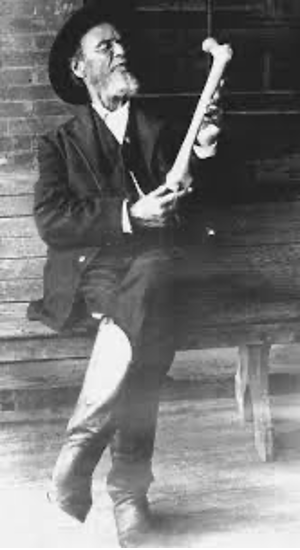
Osteopathy was born in 1874 when Andrew Taylor Still, an American frontier Doctor (1828-1917), suggested a hypothesis that addressed preventive medicine.
His supposition was simply that ‘the body contained within itself healing substances and means of combating disease’.
Historically, we can also find some attention in the health care and patients’ natural ability to heal with Hippocrates (c. 460 - c. 377 B.C.E.), Galen (c. 130 – c. 200), Sydenham (1624-1689) and others.
Andrew Taylor Still got motivated in the study of the nature of health, illness, and disease after a personal tragedy that saw the death of three of his daughters for spinal meningitis.
In his view, the job of the physician was to correct structural disturbances so that the body could work normally (just as a mechanic adjusts his machine), instead of treating only the disease with medications, herbs, etc.
In the 1880s, Andrew Taylor Still named Osteopathy, composed by 2 words:
Osteo = osteon, meaning bone
Pathos = pathine, meaning the path of suffering or having a disease
With this name, the intended meaning was related to the idea of "feeling the motion of the tissues" or understanding the "incoming effects from bones" while suffering from pain or disease.
According to him, bones can be used as a key to relieve pressure on nerves, veins and arteries thanks to the anatomical connection with orifices (foramina) and fascia tissue that covers all the body’s structures.
In answer to the question “What is osteopathy?”, Still stated “It is a scientific knowledge of anatomy and physiology in the hands of a person of intelligence and skills, who can apply that knowledge to the use of a human being when sick or wounded by strains, shocks, falls, or mechanical derangement or injury of any kind to the body”.
Classic osteopathic philosophy of health:
Health Is a Natural State of Harmony
Still believed health to be the natural state of the human being. In his own words: “Osteopathy is based on the perfection of nature’s work. When all parts of the human body are in line, we have health. When they are not, the effect is a disease. When the parts are readjusted, disease gives place to health.”
The work of the osteopath is to adjust the body from the abnormal to the normal, then the abnormal conditions give place to the normal and health is the result of the normal condition.
The law of matter in motion
Still observed that each part of the body is moving, growing, and developing from embryo to foetus to newborn and throughout life. Thus, each tissue, organ, and structure is designed for motion.
If “life is matter in motion”, then what is the effect on a body part that is not moving? Still reasoned that a lack of motion is not conducive to life or health. The work of the osteopath is to help the motion of the body, so health can continue.
Flow of body fluids
Still identified each component of the body as a machine that cannot run without proper lubrication, fuel, and mechanisms to remove the by-products of combustion.
He explained how lubricating and nourishing fluids flow through the arteries, veins, lymphatics, and nerves. These fluids creates tissues and organs, and facilitates their growth, maintenance, and repair. In his own words: “The human body is a machine run by the unseen force called life, and that it may be run harmoniously, it’s necessary that there is liberty of blood, nerves and arteries from their generating point to their destination.”
The work of the osteopath is to help the normal body fluids, so health can continue.
Rational osteopathic treatment:
Is based on the osteopathic principles:
The human being is a dynamic unit of function;
The body possesses self-regulatory mechanisms that are self-healing in nature;
Structure and function are interrelated at all levels.
Still designed manual approaches to release bony and soft tissue barriers to nervous and circulatory functions in order to improve chances for healing.

References:
Bordoni, B. and Escher, A. R. (2021), ‘Osteopathic Principles: The Inspiration of Every Science Is Its Change’, Cureus, 13(1): e12478.
Chila, A.G. and AOA (2015) ‘Foundations of Osteopathic Medicine’, in Contigliani, R., Marasco, M.L. (ed.), Osteopathic Philosophy, USA: Lippincott & Wilkins, pp. 1170-1176.


